Showing posts with label Film. Show all posts

Monday, February 15, 2010

Battlestar, Caprica, SF and Gender


First, to all of those college students who are in a mad quest to write a paper about "The Cask of Amontillado," the ending Italian phrase means "Rest in Peace." Do note that it is not something the protagonist with a vendetta would normally say. It is, however, something a priest is likely to say. Hmm, there's a poser.

And on to the topic the post is really about. I've had a chance to catch-up with the latest episodes of the SyFy Channel's new series Caprica. For those who don't know, the show takes place prior to the events of Battlestar Galactica (BSG), and does include some sequel information (after some pushing from those involved with the money).

If you're a fan of BSG, then you've already been through the "Starbuck is a girl" issues. No offense to the original Starbuck, but I thought the change was quite clever. Also, if you're a fan of BSG, you already know that many of the strongest and powerful characters in the series were female. Villains and Goodgals alike.

This might not seem unusual to new fans of the SF genre, but for those who date back to the stone tablet days, having strong female characters is a bit unusual. In the old days, they were mostly restricted to falling in love with Captain Kirk, screaming, falling, and wearing short skirts. Often, all of these occurred in a single Star Trek episode. It seemed females just couldn't be a part of SF.

Then Ripley appeared, and things changed (Aliens). Okay, even today the short skirts remain. But most everything else has changed.

I won't go into gender and SF. Many words have been written on the topic, and if you've not read them (this includes those students looking for something to cut and paste in your essay due at the end of this week), take the time to read the books and articles about the new role of females in SF.

Instead of venturing there, and listing articles and books, I'll jump to Caprica. At first glance, like BSG, the show seems hard and manly, full of murder and swearing ("frak"). But after an episode or two, the male anger fades into the background, replaced by teenage, female angst. The real focus of the show is on teenage girls, one of which who is a robot, and another who has no body, and a third who seems to be torn about how to interact with her robot/cyberghost friend. A quick glance at the promo photos and cast photos in this post highlights the real demographic of the series: young females. Yes, it is still aimed at males as the "Apple" photo reveals, but it is also focused at the female viewership.

For an SF series, this is unusual - at least it is historically, the last five years have seen many changes. For fans of SF, this is great news as it means there are new fans of the genre, and what appears to be a growing number of fans. And really, it is a direction the genre should be heading.

All of the above is nothing new nor surprising. As I said, it has been happening consistently over the last few years. What is interesting is how many males have not noticed. Why? I suspect because the genre is reflecting society, and is at last catching up from the Dark Ages of the genre. With any luck, as in the past, real life will imitate art and the gender barrier will continue to decline culturally based upon the acceptances of new females roles in the genre.

Friday, February 05, 2010

Surrogate - Film

Yes, I'm behind in my film watching. In fact, last night was the first chance I had to watch Zombieland and Surrogate. It seems that Zombieland has had plenty of commentaries - not surprisingly. I certainly enjoyed the film, but I didn't think it was as clever as Shaun of the Dead. And luckily for me, there are some common themes in Zombieland, Shaun of the Dead and Surrogate. Lucky because it gives me an easy segue from zombie films to "almost" zombie films.

Let me explain that last remark. Or maybe the entire paragraph. Quite often, zombie fiction/films deal with the alienation of humanity. Shaun, in Shaun of the Dead was so alienated that he didn't notice the difference between a living and undead world - until it was close enough to bite him. Similarly, Zombieland followed the "journey" plot, taking the narrator from the living world (isolated from humanity) to the zombie world, where he finally completes his journey of growth, and finds the family for which he's been searching (no longer alienated). In Surrogate, most of humanity use avatars (robots) to live their daily lives. They go to work in them, entertain in them, vacation in them, and pretty much do everything else you can imagine in them. Hidden in those "control beds" where humans dwell while operating their surrogates is something of a "zombie." But mostly, they are alienated from each other - just as in the two zombie films mentioned above.

Those of you who are familiar with Marxist literary analysis have already picked up on the keyword "alienated." Those who are just familiar with Marx are probably thinking: Is this guy a Communist? I'm a writer, therefore, I'm a Capitalist - is it possible to be anything else in the current world? What I'm saying is I'm not speaking about Communism. I'm speaking about alienation - the removal ourselves from the daily human existence. Yes, Karl Marx feared Capitalism caused this, and well it does. As a result, the theme appears in our fiction (intentionally or not). For example, to be alienated from labor is to work for a corporation, but being nothing more than a cog in a greater mechanism. To borrow from Marx's example: If I make shoes for a company, the company name goes on the shoe. That is very different from being the owner of a shoe shop, where people know me for making shoes. When I own the shop and make the shoes, I'm not alienated from what I do for a living.

So back to the film Surrogate. It is set in a world where most everyone uses robots to travel about the world, and to work. They view and sense through the robots, but their real bodies are in "VR" beds. Needless to say, the robots are physically attractive, creating a world of supermodels. Meanwhile, the humans look shabby and sickly - they don't get out much. Or, in other terms, they exist in near complete alienation.

This was something I didn't expect from the film. And I'm not sure it was the intention of the film. Isolation and vanity are clearly themes it deals with, but as a side effect alienation comes into play as it produces an artificial superstructure - a false world in which humans have their surrogate machines do the living for them. The end result is that there is no "real " living going on in the film. Husbands and wives remain locked behind doors, while their surrogates interact with each other. This makes for a clever analogy for the Internet, texting, VR, and most trends in our modern world where personal interaction can be "phoned in" from a device.

With all of that said, this is not a new idea. It has been told in many different tales many times. However, without revealing the end of the film, I will say it was strikingly similar to a short story by John Shirley titled, "Techotriptych." In fact, it was so similar in concept and execution that I briefly wondered if John wrote the screenplay for Surrogate (he is a screenplay writer). It turns out not to be wasn't the case. And if you're wondering, John Shirley's tale deals with similar themes. He'd have to comment about the alienation aspect. Although, intended or not, it is embedded in his story as it is in Surrogate and Shaun of the Dead and Zombieland because alienation is a part of Western Culture. And I think, for me, that is part of the appeal of these films and short story. They touch upon a common theme, an aspect of the viewer's (and reader's) life.

Hopefully, I've not revealed too much about the film to spoil anything, but offered enough incentive to watch Surrogate. And if you haven't seen the other films mentioned, give them a shot. The same goes for John Shirley's tale. It is powerful and makes no apologies, but that is what rattles the reader into reconsidering the world in which he or she lives.

Wednesday, July 22, 2009

American Exports

Although my mentioning of Les Secrets de Marrakech has nothing to do with my post, I thought it would be a good segue. So let me explain it first. This is the French translation, hardcover edition of my book Secrets of Morocco (published by Chaosium).

Also, for those interested, the back story to the "tablets of Ur-Nansha," which is referenced in Morocco, can be found in the soon to be released anthology Blood and Devotion anthology (edited by William H. Horner).

Now onward! The topic of what is American art has been endlessly debated, so I thought I'd add to that debate. Well, at least I'll bring it up again. Is there any original American art? (read "American" as United Station, and "art" being literature, sculpture, painting, music, etc.). And, assuming there is, what has been exported outside of the United States and how has it influenced what is a long established tradition in Western or even Eastern art(s)?

Or, is there no such thing as "original" American art?

If you haven't been following this debate since 1776, then you'll need to know that most of what exists in the U.S. has been transplanted here - like its original residents. Many folks speculate that American art is not original; rather, it is based upon and a variation of European or Western traditions in art. This has lead the U.S., particularly after the mid-1800s, to produce art that is truly American made. Yet, there are many who still say it hasn't been accomplished.

On the other hand, quite a few people believe that American culture is its greatest export - which seemingly includes "art," although it isn't clearly defined. At the same time, there are many countries attempting to prevent the infiltration of American culture (and language). In turn, this fear of culture has been the foundation for a few arguments that there is original American art and the fear of the transmission of culture is proof (as art is often viewed as "dangerous").

I confess, I've conflated quite a bit in the above paragraphs. But honestly, it isn't possible to thoroughly explain the topic in a few words. But hopefully there is enough to provide some food for thought.


Thursday, July 02, 2009

Quarantine - The Film


I confess, when Quarantine was released to the theaters, I did not rush out to see it. I didn't speed to the rental store to grab it when it was released on DVD. I didn't rent it on "Pay-per-View," or iTunes, or NetFlix when it arrived in these locations. I skipped it at the Red Box video vending machine in the local grocery story. In fact, when I finally rented it, I didn't watch it, and had to return it to avoid late fees. In general, there was little that inspired me to watch the film in the promotional material, the cover, or the copy.

At long last I've seen it, and it was quite different from what I had expected. Not that it was better than I had anticipated, but it certainly wasn't as "bad" as I had thought. While the film didn't inspire me much, it was compact, mostly well organized, and focused. It is a 1st person film (Blair Witch, Cloverfield, etc). This allows for a lower budget as filmic perfection isn't always expected, and in theory creates a different mood for the viewer - although it clearly reminds the viewer that he or she is a viewer, something many films attempt remove.

Still, I'd not say the film was bad. If you like suspense/thriller/horror/action films, it is worth your time. The camera isn't overly shaky, which is good. The premise is common to film, but a favorite (being a group of people trapped in a single location with no means of escape).

Fans of the Showtime series Dexter will recognize Jennifer Carpenter in the lead role (Dexter's sister). I believe she does a good job in the role - even if a bit of her character from Dexter bleeds through.

Gore? Yes. Not as much as a typical zombie film. But this isn't a zombie film. Toward the end it works very hard to pull the premise together, which is almost another film in itself. My guess is most viewers will figure out some of the surprises early on. This isn't a problem because it adds to the suspense, as it should. This is akin to everyone knowing a character shouldn't open a particularly door. Regardless of our shouts, and cries of tropes, the door gets opened. While there is such a door in the film, there are other elements that work for the film if the viewer is aware of them in advance, and likely surprise those viewers who do not expect them. Overall, this keeps the film working, and worth watching.

I suppose I have no fabulous words for Quarantine because it didn't work with anything original. Nonetheless, it took established conventions and maintained suspense and thrill throughout most of the film. And it does a good job of pulling it all together at the end. It is a great study in suspense - for film makers and writers. And from what I understand, it is somewhat based on a popular Spanish film [REC] (which I've not seen).

With all of the above, I'd still suggest watching this film - if you fall into any of the aforementioned categories. And keep an eye on the background elements of the story. What might be the most frightening aspect of the film is the Civil response (related to the title of the film). Always good to know there is someone out there to help. :)

Thursday, October 23, 2008

Halloween Horror - Books and Films

Sure, everyone is posting about spooky books, tales, and films this time of the year. So one more post isn't going to hurt. And, to add to the mix, I'll make a few more posts before Oct. 31st.

If for some reason you're out of things to read and watch for the season, and don't feel like reading Something Wicked This Ways Comes again, then let me suggest a novel from a few years back: Midnight, by Dean Koontz. Or, if you're in the mood for a film, then The Descent. These are not my only suggestions, they are just a starting place. More will cover over the next week or so.

Midnight - Dean Koontz

This is a classic horror/thriller novel from the days when Mr. Koontz did not have an "R" in his name. :) For those who have read Koontz, you'll know that he is skilled at blending genres, and can produce some tantalizing prose. This novel isn't filled with gore. Instead, Koontz works on producing chills. The opening is a grabber - a classical approach to horror fiction. And the pacing and mystery follows along with the best of any action thriller. The characters are likable, and while there is some use of technology that perhaps is an attempt to forewarn the reader about the promises of science, it still works. To prevent spoiling what is going on in the novel, I'll not reveal any more details (other than part of the copy below). This is a novel for readers and writers alike. It is even better if shared with someone else, or at least read when the night approaches the witching hour. As a bonus, fans of Koontz will recognize the setting of Moonlight Cove. Lastly, when reading, do a "Poe count." That is keep track of how many allusions Koontz makes to Edgar Allan Poe.

(Synopsis):

In picturesque Moonlight Cove, California, inexplicable deaths occur and spine-tingling terror descends to this "edge of paradise." Growing numbers of residents harbor a secret so dark it is sure to cost even more lives.


The Descent

In the mood for a film, then try this one. I confess, I didn't see this film at the theaters. The commercials portrayed it as something of a "gore festival." Then a number of people told me how great it was. I waited for it to appear on DVD, rented it, and then didn't watch it (because the cover yelled, "Gore!"). Okay, I have no problem with slasher films or splatter punk, but I must be in the mood for it. Those moods are rare, and seem to be more uncommon with each passing year.

Eventually, I re-rented the film and watched it. What a delightful surprise. Yes, there is some gore, and blood. But it isn't over the top. This film is well directed, and the acting works wonderfully. The basic premise is a group of gals decide to go spelunking. Okay, that sounds a bit hokey - something out of a typical horror novel: A band of females go into the woods and undress. Well, in the film, they go into the woods, and then into a cave, but there is no undressing. (The undressing is usually a prelude to death in horror novels and films).

As for the "gore" factor, you can see from the original cover (above) that this film use blood as a selling element. I don't believe it did well at the box office. This might be due to the fact that they attracted the wrong audience, and kept away the correct audience.

Instead, we have a cast of strong female characters who find themselves in a dire situation. In fact, it is a bit of a Lovecraftian tale - but not overtly so. This film is suspenseful, thrilling, and surprising. The cinematography captures the claustrophobic elements of exploring caverns, and the characters interact well - perhaps too well.

So what does that last remark mean? Ignore it the first time you watch the film. Just enjoy it and the surprises. But, once you're done, return to it, and examine the characters. Each person in the group can be connected to an aspect of the mind (Ego, Id, Emotion, Reason, Wisdom, Logic, etc.). So when you re-watch it, take that into account, and see if the film has the same ending. I'll say to no more for fear of spoiling things.

I've also included a shot from the film - one that captured the close quarters. This aspect is important to the tension, and it works upon the viewer quite cleverly. Even though I'm not claustrophobic, there are some scenes where I felt like I was in the tunnels, struggling to get out. Also, when watching the film, keep an eye on the background. The directors like to hide things here and there. It works well as they will pan across an area twice, once with something in the background, and then once without. This isn't pointed out to the viewer. It looks like a typical pan shot.

Lastly, I included what appears to be the new cover for the DVD. For me, this only confirms my thoughts about the secondary story in the film (and how the characters work together). Of course, you'll notice that the gore is missing, and in its place are a group of females (another target audience here?) However, I believe that an argument could be made about the cover. The poses resembles the shape of the human brain - and clearly a skull. At the least, we can say it's a head. :) But to avoid going deeper into that aspect, I'll just say the film is "THE Descent." Hmm, descent into what? Into a cave? Into madness? What could the caverns represent. Oh, Freud would have so much fun with this.

Sunday, July 27, 2008

Watching Movies is a Lonely Business

Movies, or "films," have been around since the late 1800s. In the early days of the Lumiere brothers, films was in its infancy. This famous team of film makers produced hits about "quitting time at work," and train arrivals. The technology was new to the public - and difficult to get to the public. There were no film theaters, so the films can to go to the viewers. Or, folks could visit a Kinetoscopes - a machine that the viewer peered into and watched the film. This was a lonely form of film watching, and usually required standing to look into the viewer.


It didn't take long for the inventive Thomas Edison to find a means of delivering the entertainment. Not only did he improve camera technology (putting those tiny track feeds on the side to keep the film steady), but he also created the Vitascope. The Vitascope projected the film onto a large screen so many people could view at once. This increased profit per showing, and increased the market for films.

Throughout the 1920s and 1930s, the film industry grew (moving from New York City to Hollywood Land). And the theater grew as well. Vast movie palaces were built, with multi-screen theaters, restaurants, entertainment, and quite a few other things (such as roller rinks and child care facilities). All seemed well. By the 1940s, film had peaked with box office sales. In fact, even with the large numbers produced by blockbuster films today, theaters have never seen the level of viewers in a theater since the 1940s. Yes, the price has gone up, and the money earned has increased, but the total number of people visiting the theater has continued to drop.

Some blame television. Why go to the theater when you can stay at home, watch a film and eat a "television dinner" on a tray in front of the 12 inch screen?

Well, to skip ahead, around the 1980s the film industry seemed like it was on a comeback. After countless inventions such as 3-d, sense-o-vision (which included odors, fragrant scents, vibrating chairs, and other oddities that went with the film), people returned to the theaters. The industry flourished. And new movie palaces were built - this time called "multiplexes." I wondered at the time if that was a wise choice. Had the golden age of film viewership returned, or was it simply a wish?

Then something changed again. The VCR gave theaters a run for their money. The theaters won for the most part. But that didn't last, as the DVD came into existence. In the 1990s, theaters started to see declines in attendance. Multiplexes were still being built, and were starting to go out of business. People were renting DVDs and watching them on 27 inch screens, or even larger projection screens.

This time the film industry embraced the change, and lowered the price of DVDs. The joke of a "straight to DVD" release started to lose its meaning as many studios bypassed theaters, cable, and television, taking a straight to DVD path for a larger profit. The DVD industry boomed, and theaters fell behind. Attempting to compete with this market, cable companies start providing On Demand films. Then a decline in DVD sales, renting, and profits occurred.

Now we add in the Internet and home theaters into the fray. Film studios have been looking for a means of cutting out the added material costs of films. Digital sounded like the answer, but digital theaters are costly, and still compete with the vast array of film available directly to consumers. Mailing DVDs is helpful for those in rural areas, and organized people who return them :), but it still didn't pep up the industry. As with Edison's Vitascope, several companies have come to the rescue. Except, rather than producing a technology that allows people to gather together and watch a film, now they can stay at home. TiVo is capable of downloading movies from Amazon.com and other sites, allowing "on demand" watching, without having to drive to the video store, or to wait a day or more for a DVD to be mailed. Apple has also jumped into the arena. Well, they already were with the new generation iPods. However, Apple TV promises consumers much more than the hand-held devices. The list of similar devices are countless. I'm just referencing the two that seem to be dominating the market. And of course, a personal computer can do the very same thing.

I wonder if this will be the "hook" that studios have been looking for. And are viewers happier with it? Sure, there is no large audience to share in the enjoyment, but then "blockbuster" films and classics are readily available (if you have a good Internet connection). In a way, we've come full circle, returning to the Kinetoscopes.

Tuesday, June 03, 2008

Is Indiana Jones too Late?

I must admit, I've yet to see Indiana Jones and the Kingdom of the Crystal Skull. For some of you, this may appear shocking. Of course I'm a Indiana Jones fan - can't beat that last name. I love the genre, and I think the first film was quite spectacular, while the others were very entertaining. Nonetheless, I can watch all of them over and again.

What I find interesting about the series of films is that the second was a prequel to the first, and the third was a mandatory quest for the Holy Grail with Indy aging all the way, and the love interests getting younger. Still, some folks like all of them, while others favor only the one or two. Occasionally, I hear the word "campy" tossed about. And so time passes, while fans wait for the rumored (rumored for many years) 4th film. Now that it has arrived, the best reason people are offering me as a cause to see it that it has my last name, and it is in the genre in which I sometimes write. A few people have offered "the music" ias another reason - all rather weak appeals. In fact, the merits of the film are seldom mentioned, and seem to vary more than the previous "questionable" films.

Indiana Jones has become a cultural myth for many people, and that first memory grows over time rather than fades. This makes it all the more difficult for a new film to succeed - it must compete against a long history of fond memories, and the initial excitement. Oh, and Indy is starting to look his age.

I also learned, to my surprise, which it shouldn't have been, that the film occurs in the 1950s - a Cold War era pulp. Not only did this disappoint many people in Russia who feel the former Soviet Union is portrayed unfairly (I won't venture into that area), but it also disappointed many people who wanted Indiana Jones to confront the Nazis a final time. Naturally, I see the reason why the film was moved into the '50s. It would be difficult to explain the protagonist's aging (did I mention the aging again?). But maybe this was always the scheme - to venture into the 1950s, and have a sidekick named Mutt (Mut?) to play off the family dog's name. Having not seen the film, I can't offer much of an opinion there.

All of this leaves me wondering if the film added to the cultural myth, or if it will be ignored in the long run, raising the status of those other two films that many people disliked. Likewise, does this say something about the audience? Has culture and circumstances changed too much for a hero such as Indiana Jones?

Tuesday, March 18, 2008

Meteors, Marx, and Lovecraft

It is seldom that an intersection of meteors, Marx, and Lovecraft occurs. Or maybe not. Ray Huling, recently posted an article on The Escapist titled, "When the Sky Comes out of the Ground" that brings these three things together. For those who have not read it, I suggest you do. Some of the interesting points it makes is that Lovecraft wrote allegories of science, and that by making a recent meteorite impact into something "Lovecraftian," the event has become "unreal." Similarly, he connects Pravda's reporting of the incident with the propagandist version of an allegorical retelling of the event (my words, not his). This links us back to Karl Marx who attempted to reveal the "reality" behind historical progress. Okay, maybe "reality" is too strong of a label; perhaps "truth" is better? I'd imagine Foucault would disagree (I'll not bring him into this).

So now you're probably wondering What is he posting about? The answer is the connection between fiction and history and reality (and I suppose a meteorite). I'll try to make it brief. Marx claimed that history as it had been written was something of a fraud -- it revealed "progress," but the "progress" in reality was submission to a social/economic order. That is oversimplifying Marx, but we don't need to get into a discussion of dialectics. So Pravda comes along, and being a vehicle for the former Soviet Union (a rather unMarxist state), it reveals the "truth." Normally this is done by pointing out flaws and failures and falsehoods in Capitalist states. Or, in other words, telling a "Marxist" allegory about "reality." In case you're wondering where the meteors come in, read about it in Pravda -- the claim is that a meteorite that fell in Peru was a U.S. Spy satellite.

At last, we move Lovecraft, who wrote allegories of science. Although, I'd say he thinly veiled the "science" of his day. He seemed to fear of the degeneration of the human species, which the "science of eugenics" placed at the feet of the interbreeding of various races (think "Aryan" being the superior race of Lovecraft's day, and all others inferior). Eugenics was one of the predominant "sciences" during Lovecraft's life, and perhaps the most lacking in scientific method, study, and data. It was an allegory in itself. This means that Lovecraft was twice removed from the topic he thought to be the "truth." (For those unaware, the United States had a very active eugenics program in the early 20th century).

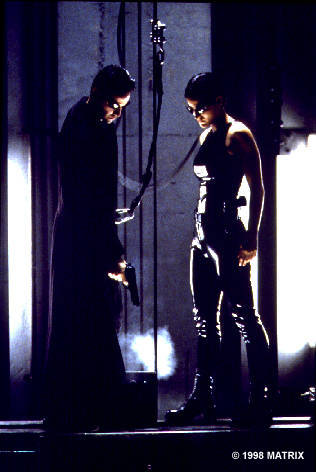
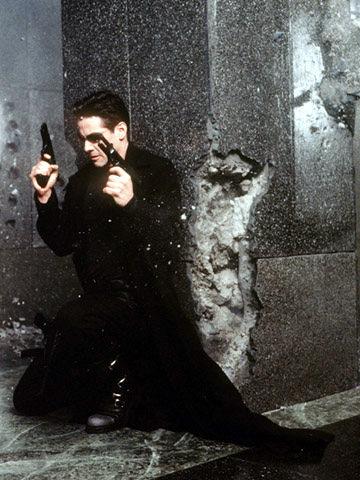
But what does this have to do with the film The Matrix, you ask? (a very insightful question). What I'm adding to this mix is that the film, The Matrix, used allegory to speak about the "truth," or what the writers deemed the truth. Some people called it propaganda. With its tubes, wires, cables, and tentacled machines, combined with the fear of computers designing "reality," Lovecraft is readily found. And the dominant alienated labor theme brings Marx into the film. But it didn't have a meteorite.

All of this leads to one path, and it is an old one: fact and fiction can be allegorical. Ray Huling makes the point in his article that the materialist roots of Pravda and Lovecraft are now used today to deny reality, rather than reinforce it -- enter The Matrix: it looks real, but it is artificial reality. That is one of the birthmarks of our era (sometimes termed "postmodern"). "Better than real" is the slogan. The simulation is much more entertaining than the real world. In fact, where is there room for "truth" in such a system? Maybe there is only space enough for a "New and Improved Truth." But that implies there once was a Truth.

So was the meteorite in Peru filled with alien space germs? Or was it a spy satellite, poisoning everyone with radiation? Or did the collision send underground toxins into the air, making those in the area sick? I guess we are left to pick our own "truth," and move through our own "reality," sharing it with those who agree. At the very least, we know that fact is sometimes fiction, and fiction is sometimes fact. That has to be comforting in itself.

Thursday, August 23, 2007

A British Invasion

For many years American pop-culture has had great success in traveling to other parts of the world, and taking root. Of course, American films and Hollywood are probably one of the most successful forms of cultural colonization. However, this seems to have changed a bit in the last few years. Films and televisions shows from other countries are finding homes in the U.S. A plethora of television shows that have been remade are readily found, and films either directly made in other countries or funding by from outside the U.S.

Fans of genre fiction are likely to have spotted this with the return of Dr Who. Years ago, this television series was often relegated to late night showings on PBS stations. It was thought campy, difficult to understand, and low budget – and mainly had a cult following in the U.S. Today, the new Dr Who is thought to be campy, sometimes difficult to understand, and higher budget, but it has more of a mainstream genre following (I’m not sure what “mainstream genre” is, so just go with me on that one).

There has always been a style to the Dr Who series, one that in the past was thought to be to borderline humorous for serious SF/Fantasy viewers. Now it has picked up quite a following, and has spawned a related series named Torchwood (it seems this one is too steamy for the U.S. market).

In films, 28 Days Later arrived on U.S. shores with a burst of energy – it even has Christopher Eccleston, also known as the “9th Dr Who.” It is a fast paced zombie-like film, where the characters find themselves in a world suffering from an overdose of “rage.” It follows the apocalyptic zombie storyline, but has a few twists. Perhaps most notable is the lack of American actors and the setting. It lacked the camp of Dr Who, but it certainly had its own, non-standard Hollywood perspective. This film hit with such success that another is in the works.

Following fast on the heels of 28 Days Later was Shaun of the Dead. As this film is a horror/comedy, some of the campy features return – all for the good. Yes, this is a zombie film and a romantic comedy. And it is something more like The Office (another British import, later Americanized). Shaun, the protagonist, simply doesn’t see that he isn’t living life, and most of those around him are already dead – zombies or not. There have been similar American films, but none seemed to have gained the success of this one.

This leads me to the Sci-Fi Channel’s remake of Flash Gordon. This is an American hero, but with some of the original FG's (unintentional?) campy qualities. It seems that the revivified version of Flash Gordon is playing to the Dr Who market, but adding an American hero and setting instead. Honestly, I never thought that Flash Gordon would ever see the television screen or theaters after its last incarnation when Queen performed the soundtrack (that version was also campy). But maybe this time around, viewers are ready for that flavor of production.

There are countless other films and programs that are produced in conjunction with the BBC, many of which are very “Hollywood” and very British at the same time. Most have meet with success in the U.S. market. And I’ll not go into all of the other countries following this path (it wouldn’t fit with the title of this post), but there are plenty out there. I can only wonder how much this will change the American notions of film and fiction.

Friday, March 16, 2007

Babylon 5 Gossip

While this is not news to the devout followers of the SF television series Babylon 5, it might be to those who thought the program had vanished. Nearly two weeks ago, I received a telephone call from J. Michael Straczynski. He was in Vancouver, doing the final mixing on a new DVD release titled: Babylon 5: The Lost Tales. Over his cell phone, I could hear the snippets of the audio -- although he urged that I forget anything that I heard. But, the reason for his call was get me to send a release for Warner Brothers (which was not needed, but Warner Brothers wanted to make sure there were no problems).

Why a release from me? I obviously have nothing to do with the production. But, as part of the screenplay for The Lost Tales is related to JMS's story that appeared in issue #7 of Dark Wisdom (www.darkwisdom.com), a release from me was thought to be needed.

After some debate with a stubborn fax machine on the receiving end, I managed to get the paperwork through. And during my discussion with JMS, I did hear some interesting things in the background, none of which I do remember (honestly). However, for those who have a copy of Dark Wisdom #7, and who are Babylon 5 fans, then you might have an idea of why a priest from Earth is needed on the station. That issue of the magazine is sold out, and beyond being connected to Babylon 5, it was also the last digest size issue of the magazine. So if you are a collector, the value might have just increased.

Here is a link to his personal backstage photos site: (http://www.babylon5scripts.com/TLT-JMS-Photos.html). Again, it isn't a secret. Dedicated fans of B5 already have seen this as well. But, if you haven't followed the series, or didn’t know about The Lost Tales, then do take a peek.

Thursday, March 08, 2007

Jean Baudrillard Passes Away


The Desert of the Real
For those who know me or have read a few posts on this blog, you likely know that I was a fan of Jean Baudrillard's theories -- as controversial as they often were (and often misunderstood). He passed away yesterday, at the age of 77. Perhaps his most popular work was Simulacra and Simulation, as it made a guest appearance in the film The Matrix.

Here is a link to an NPR article for those interested:

http://www.npr.org/templates/story/story.php?storyId=7761639&sc=emaf


As Fate would have it, one week to his death, I will be delivering a paper at the IAFA about The Matrix, using Baudrillard's theories to illustrate cultural construction and hidden "unrealities" in the structure of the film and society (a bit academic sounding, but the only way to describe it). If you're not familar with his writings, I'd suggest taking a peek at them -- and know that they often seems "startling" at first glance.

Wednesday, January 03, 2007

Conventions Continued...


I'll stop with the list of conventions after this, and create a link -- much easier to keep track.

For those of you who are not attending Wiscon, ;) the International Association for the Fantastic in the Arts (IAFA) is holding a conference in Fort Lauderdale, FL -- March 14-18 (www.iafa.org).

I'll be attending, and delivering a paper on the film The Matrix. I'll post more details as I have them.


Thursday, November 16, 2006

The Desert of the Real


I promise not to spout too much from Jean Baudrillard's text Simulacra and Simulation. Instead, I'll try to keep to the film The Matrix. While this was a popular film, I know of people who have not yet seen it. So if you don't want the film spoiled, stop reading about now.

In the magazine Dark Wisdom there is a regular feature titled The Film Vault. Typically this column brings together 3 people who offer opinions about a film -- however the 3 people do not communicate about it beforehand, so the opinions are somewhat isolated. I thought I'd try a variation of that here. I'd post an opinion, and welcome any others.

Instead of following the common path and discussing The Matrix as a metaphor for culture/society, I'm going to view it as a metaphor for identity. Throughout the film, Thomas Anderson/Neo is forced to confront his identity -- he has "two lives," and one of those "lives has a future." In the film, Mr. Anderson is a programmer by day and a hacker (rebel) by night -- and he has a fondness for things made by Panasonic. But in this filmic metaphor for identity, Anderson/Neo must confront who he really is, and not who society wants him to be.

So who does "society" (AKA authority) want him to be? It would seem: Thomas Anderson, a programmer for a respectable software firm, who has a social security number, pays his taxes, and who help's his landlady take out her garbage. Or is that the case? It seems like the right answer. But throughout the film, Mr. Anderson/Neo is followed by Morpheus, a rebel, a "dangerous individual" who knows the true identity of Mr. Anderson. That is, Thomas Anderson is Neo who is "the One." And "the One" is the one who will lead the other lost indiviuals to freedom. (And that is "the One" as living in room 101).

I'll cut through most of the film, and get to my point. The Oracle never tells "Neo" that he isn't the One; rather, Neo decides this himself. All the Oracle tells Neo is that he will have to make a choice (a central theme in the film -- choice) and that he "is not too bright." And on first glance, it appears that Neo is the one, and everyone but Neo knows it (including the audience). Here is where the trouble begins.

If Neo does not want to be Mr. Anderson, as Agent Smith always calls him, then we assume he wants to be "Neo," and realizes on his own what all of us have already known: He is the One. There is one scene in the film that exemplifies this argument quite well, and that is where Neo and Agent Smith fight in the subway. Smith says "Do you here that, Mr. Anderson? That is the sound of inevitability." The response to this is: "My name is Neo." But "Neo" isn't quite "the One" at this point. However, Morpheus points out that "he is beginning to believe."


Just as Mr. Anderson is told who is his throughout the film, and we assume throughout his life prior to the moment in the film, Morpheus and others nudge Neo toward being "the One." Even though Neo tells the rest of his friends that the Oracle said he wasn't "the One," she never did say that. Actually, she let Neo say that on his own because identity (or being the One) must be decided, selected, not told.

So what? We know Neo's "the One," what's the point? My point is that Neo believes what he is told, and comes to accept it. In fact, had not those around him been so persistent, Neo might not have become the One. This is important, because the film, intentionally or not, focuses upon identity, and while Neo fights not to be Mr. Anderson, he falls into the same "trap" by accepting his identity as "the One."

Yes, this is a minor point that perhaps deconstructs part of the plot. Or, maybe it is a "rabbit hole" that carries us deeper into the matrix. Those who have seen the film probably noticed that life in "the matrix" has a green tint (the film is tinted green), and life outside the matrix is tinted blue. If we follow this metaphor, then the artificial world is green -- a hint to the audience that something is wrong with the world. But why accept that the "real" world is tinted blue?

What if Morpheus' reality was another layer of the artificial world? This one, lucky for us, is color coded blue. Morpheus (also the god of dreams in mythology) plucks Neo into "his" world and convinces Mr. Anderson that he is the savior of those ready to be freed (also known as the people who cause problems in the 1st layer of the matrix). What better way to deal with rebellious members of society than to give them their own simulacrum -- a world that they can be rebels, but in reality are not a threat to anything. Such a world keeps them busy. And in the case of the film, they are busy producing energy (or, to put it in other terms: they are completely alienated from their labor). If we follow this path, then Neo becomes the leader of a group of rebels who are "AUTHORized" by society. And while Neo won't accept his "Mr. Anderson" identity, he becomes quite attached to his "Neo the One" identity. Likewise, he becomes an icon, a magnet for those troublemakers, pulling them from their hidden ranks in society. Soon they join-up with Neo in the "blue" reality, and they cause simulated havoc.

Okay, I'll go back to Baudrillard again, but just briefly. Here, the "real" rebellion is replaced by the simulated rebellion, and given enough time, "real rebellion" vanishes. What remains is a group of rebels, still connected to "the system" (the matrix), still alienated from their labor, but they are content because they believe they are "raging against the machine." Instead of being a threat, they are actually a filter for finding those who dislike society, straining them out, and giving them a new "prison for their mind" where they go about their business of working for the system. Maybe we are back to the metaphor for culture/society.